
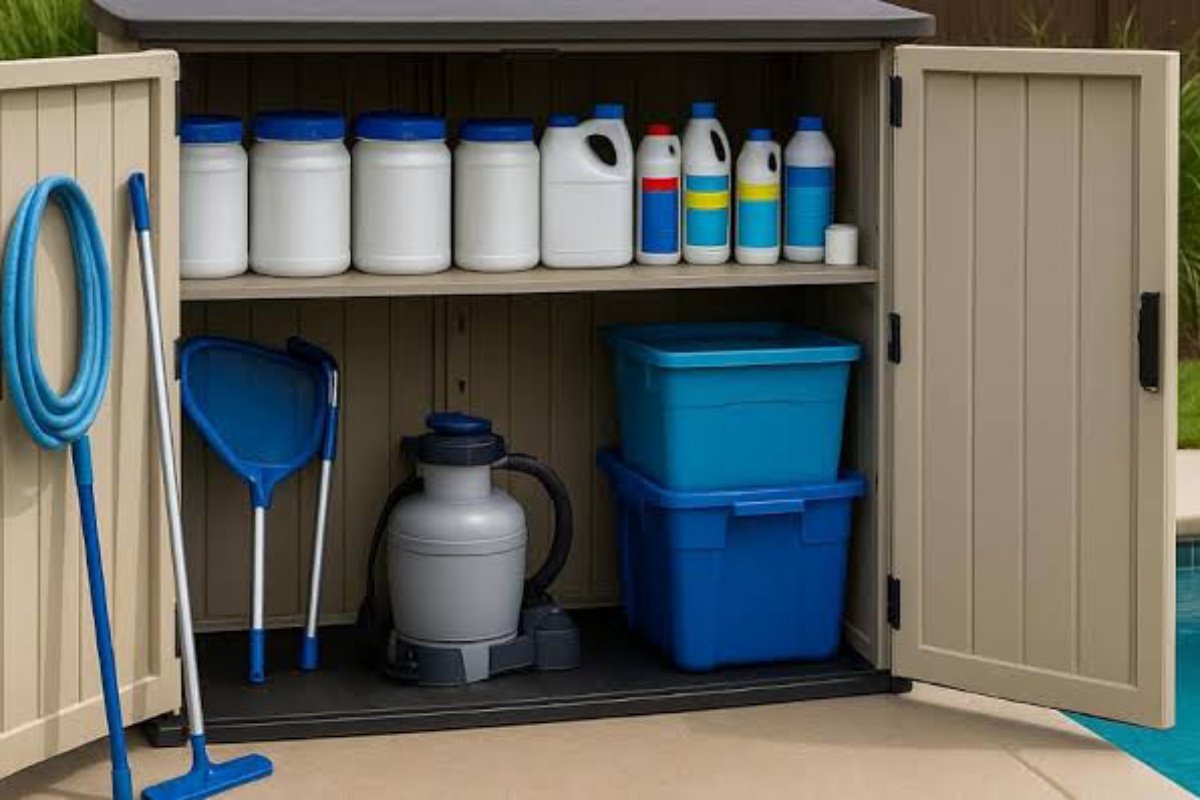
You don't have a sprawling garage or a dedicated pool shed. Maybe you're working with a tiny garden shed, a cramped garage corner, or even just a cupboard. But you still need to store chlorine, shock, pH adjusters, and all the other chemicals that keep your pool sparkling.
The challenge? Pool chemicals need proper storage—but small spaces don't have to mean compromise. With a few smart hacks, you can store your chemicals safely, keep them organised, and save money by preventing waste—all in a fraction of the space you might think you need.
This guide covers practical, space-saving storage solutions for pool owners with limited room. And when you need high-quality chemicals in the right packaging—along with expert advice—poolblue.store has you covered.
The Golden Rules of Chemical Storage (Even in Small Spaces)
Before we get into the hacks, let's review the non-negotiable rules. These apply whether you have a 10,000-square-foot warehouse or a 3-foot cupboard.
Rule Why It Matters
Store cool and dry Heat and moisture degrade chemicals, wasting your money
Keep chlorine away from acids Mixing can release deadly chlorine gas
Store in original containers Labels are critical for safety and proper use
Keep out of reach of children and pets Chemicals are dangerous if ingested or inhaled
Ensure good ventilation Some chemicals release fumes
Never store on concrete floors Moisture can rise and damage containers
Poolblue.store tip: All our products come in durable, clearly labelled containers designed for safe storage—even in tight spaces.
Hack #1: Vertical Storage — Go Up, Not Out
When floor space is limited, the answer is simple: use your walls.
Solution Space Saved Best For
Wall-mounted shelving Frees up 5–10 sq ft of floor space All chemical containers
Over-door organisers Uses otherwise wasted space Small bottles, test kits, accessories
Pegboard with hooks Customisable storage Nets, brushes, poles, small items
Tall, narrow shelving units Maximises vertical space Buckets and bulk containers
Pro tips:
Install shelves at least 18–24 inches above the floor to prevent moisture damage.
Use sturdy, heavy-duty shelves rated for the weight of chemical containers.
Keep heavier items on lower shelves for safety.
Hack #2: The Chemical Cabinet
A dedicated chemical cabinet is one of the most space-efficient solutions available.
Cabinet Type Space Required Pros
Lockable wall-mounted cabinet Minimal floor space Secure, organised, child-safe
Freestanding metal cabinet Small footprint Fire-resistant, lockable
Plastic storage box (lockable) Very small footprint Weatherproof, portable
Repurposed tool chest Moderate footprint Durable, lockable, organised
What to look for:
Lockable —essential for safety
Ventilated —prevents fume buildup
Chemical-resistant —won't degrade from spills or fumes
Poolblue.store advantage: We can recommend the right storage solutions for your space—and we stock chemicals in space-efficient packaging.
Hack #3: Use Stackable Containers
Stacking containers can dramatically reduce your storage footprint.
Container Type Space Saved Best For
Stackable buckets Up to 50% less shelf space Chlorine tablets, shock
Nesting containers Nest when empty, stack when full Seasonal storage
Modular storage bins Customisable Small bottles, test kits, accessories
Important: Always stack according to manufacturer instructions. Never stack heavy containers on top of fragile ones. Place heavier items on the bottom.
Hack #4: Under-Utility Sink Storage
If you have a utility sink or outdoor tap, the space underneath is often wasted—but perfect for chemical storage.
Why it works:
Out of direct sunlight
Often already ventilated
Accessible but out of the way
What to store:
Test kits
Small chemical containers
Measuring cups and scoops
Gloves and safety gear
Caution: If the area is damp or prone to flooding, use waterproof storage containers or move chemicals to a drier location.
Hack #5: The Weatherproof Outdoor Box
If you don't have indoor space, a weatherproof outdoor box is a practical solution.
Box Type Pros Cons
Deck box (lockable) Weatherproof, large capacity Can get hot in direct sunlight—place in shade
Plastic storage chest Affordable, durable Must be lockable and ventilated
Metal shed (small) Very secure, fire-resistant Larger footprint, more expensive
Pro tips:
Place the box in a shaded, ventilated area to prevent heat buildup.
Ensure the box is lockable and out of reach of children.
Never store chemicals in an unventilated box—heat can build up and cause degradation or gas release.
Hack #6: Repurpose Household Items
Some common household items can serve as excellent chemical storage solutions in tight spaces.
Item Use Space Saved
Hanging shoe organiser Store small chemical bottles and test kits Uses vertical door space
Magazine rack Hold chemical instruction sheets Keeps paperwork accessible
Plastic drawer organisers Separate chemicals by type Prevents mix-ups
Wine rack Store small chemical containers Uses odd shaped spaces
Tool roll (canvas) Organise testing equipment Stores flat, hangs on wall
Important: Never repurpose containers that once held food or drink. Always use original chemical containers for storage.
Hack #7: Create a Mobile Storage Cart
A wheeled cart allows you to store chemicals in one place and move them where needed.
Cart Type Pros Cons
Kitchen trolley Portable, accessible Must be stored indoors
Garden cart Weatherproof, large capacity Larger footprint
Tool cart Durable, lockable More expensive
Pro tips:
Lock wheels to prevent accidental movement.
Store the cart in a shaded, cool area.
Never leave chemicals on the cart in direct sunlight.
Hack #8: The "First In, First Out" (FIFO) System
In a small space, organisation is everything. Rotate your stock to prevent waste.
Step Action
1 Date every container when you receive it
2 Place newer purchases behind older stock
3 Use older products first
4 Check expiry dates regularly—but never mix old and new chemicals
Why this saves money: Expired chemicals lose effectiveness. You end up using more to achieve the same result—or worse, they don't work at all and you waste money.
Hack #9: Separate by Type, Not Just by Space
Cl is the most reactive element in the chlor-alkali group. All forms of chlorine—trichlor, dichlor, liquid chlorine, calcium hypochlorite, and pool shock—must be stored separately from acids and other reactive chemicals. This is non-negotiable.
Chemical Type Storage Tip
Chlorine products (all) Store in one area, completely separated from acids
Acids (muriatic acid, pH-minus) Store in a separate zone—ideally in a different cabinet
Alkalinity products Can be stored together (pH-plus, baking soda)
Test kits and accessories Keep in a separate, dry container
Shock treatments Store completely separately from all other chemicals—especially in small spaces
Poolblue.store tip: We clearly label all products and offer storage guidance to help you organise safely, even in tight spaces.
Hack #10: Smart Packing — Use the Right Containers
In a small space, container shape matters as much as size.
Container Shape Space Efficiency Best For
Square/rectangular buckets Highly efficient—no wasted corners Chlorine tablets, shock
Tall, narrow bottles Good for vertical storage Liquid chlorine, acid
Stackable designs Maximise shelf space All containers
Flexible pouches Conform to odd spaces Small quantities
Poolblue.store advantage: We offer space-efficient packaging and can advise you on the best storage format for your space constraints.
Pool Chemical Storage Quick Reference
Problem Solution Space Saved
No floor space Wall-mounted shelving Frees 5–10 sq ft
Only a cupboard Use vertical space with shelving Uses otherwise wasted space
Outdoor only Weatherproof lockable box Keeps chemicals safe outside
Limited budget Repurpose household organisers Minimal cost
Odd shaped space Modular containers Fits any space
Need portability Mobile cart Moves where needed
Safety Checklist for Small-Space Storage
Safety Item Check
Are all chemicals in their original, labelled containers? ☐
Are chlorine and acid stored completely separately? ☐
Is the storage area cool (below 80°F) and dry? ☐
Is the area well-ventilated? ☐
Are chemicals out of reach of children and pets? ☐
Are containers secured and stable (not at risk of falling)? ☐
Is there a fire extinguisher nearby? ☐
Are emergency contact numbers posted nearby? ☐
Do I rotate stock (FIFO)? ☐
Do I check products before use? ☐
What NOT to Store Together in Small Spaces
Incompatible Pair Why
Chlorine + Acid Releases deadly chlorine gas
Chlorine + Oils/grease Fire hazard
Calcium hypochlorite + ANY other chemical Highly reactive—store separately
Liquid chlorine + Acid Dangerous gas release
Different types of chlorine Explosion or fire risk if mixed
Why Poolblue.store Makes Storage Easy
When you buy from poolblue.store, you're not just getting quality chemicals—you're getting packaging and guidance designed for real-world storage needs:
What We Offer Benefit
Space-efficient containers Designed to stack and store easily
Clear, durable labelling Never confuse chemicals—even in tight spaces
Expert storage guidance We help you organise safely
Fresh, high-turnover products No outdated stock that might degrade
Starter bundles Compact, organised kits for small spaces
Bulk options with storage advice Buy in bulk—but only if you have the space to store it properly
We believe that smart storage is smart saving. When you buy from poolblue.store, you're set up for success from day one.
Final Verdict: Store Smart in Any Space
Limited storage space doesn't mean you can't store pool chemicals safely and efficiently. With vertical storage, stackable containers, clever repurposing, and proper organisation, even the smallest shed or cupboard can become a safe, functional chemical storage area.
The key is planning: separate chlorine from acids, keep everything cool and dry, and rotate your stock to avoid waste.
And for the products themselves, poolblue.store offers the quality, packaging, and guidance you need to keep your pool perfect—no matter how small your storage space.
Visit poolblue.store today to explore our full range of pool chemicals, test kits, and storage solutions. Your perfect pool starts with smart storage—and we're here to help.