
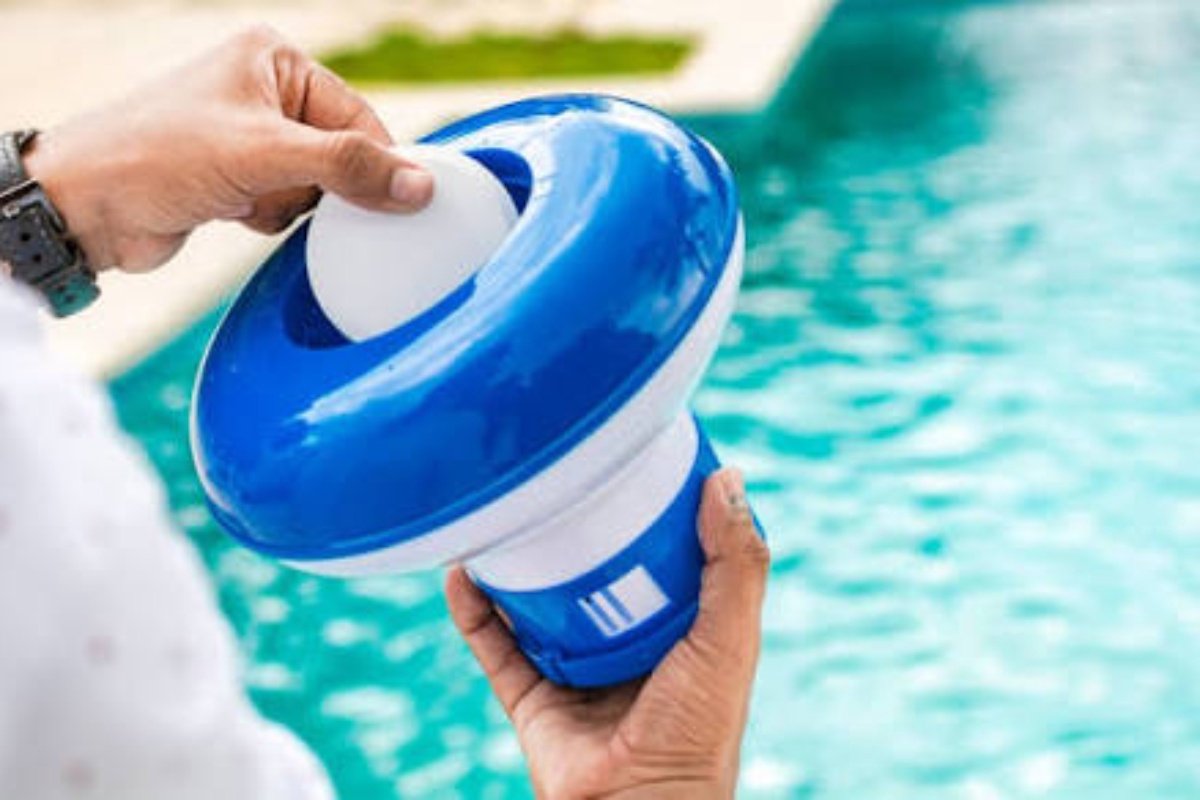
How Much Pool Chemical Should You Use? (Complete Dosing Guide)
One of the most common questions new pool owners ask is: "How much of this stuff do I actually put in?" It's a great question because adding too little wastes your time and leaves your pool unsafe, while adding too much can damage equipment, irritate skin, and waste money.
One of the most common questions new pool owners ask is: "How much of this stuff do I actually put in?" It's a great question because adding too little wastes your time and leaves your pool unsafe, while adding too much can damage equipment, irritate skin, and waste money.
The short answer? It depends on your pool's volume, your current test readings, and the specific product you're using. But don't worry—this complete guide will walk you through everything you need to know, with clear dosing guidelines for the most common pool chemicals. And when you need precise, high-quality products with clear instructions, poolblue.store has everything you need.
The Golden Rule: Test First, Then Dose
Before you add anything to your pool, you must test your water. You can't know how much to add if you don't know where you're starting from.
What to test:
pH
Free chlorine
Total alkalinity
Cyanuric acid (stabiliser)
Calcium hardness
Poolblue.store tip: We stock accurate test kits for every budget—from simple test strips to professional-grade liquid drop kits. Get reliable results every time.
How to Calculate Your Pool's Volume
All chemical dosing is based on your pool's volume in gallons or litres. If you don't know your pool's size, here's how to calculate it:
Pool Shape Formula
Rectangular Length × Width × Average Depth × 7.5 = Gallons
Round Diameter × Diameter × Average Depth × 5.9 = Gallons
Oval Length × Width × Average Depth × 6.7 = Gallons
Example: A rectangular pool that's 16 feet wide, 32 feet long, and has an average depth of 5 feet holds approximately 19,200 gallons.
Chlorine Dosing: The Complete Guide
Chlorine is your primary sanitiser—it kills bacteria and algae. But different chlorine types have different dosing requirements.
Liquid Chlorine (Sodium Hypochlorite)
Liquid chlorine is fast-acting and doesn't add stabiliser to your water. However, it degrades over time, so buy only what you'll use.
General dosing guideline: To maintain proper chlorine levels, add 2–10 fluid ounces per 10,000 gallons depending on your pool type.
Pool Size (Gallons) Unstabilised Pools Stabilised Pools
5,000 20 fl oz (2.5 cups) 10 fl oz (1.25 cups)
10,000 40 fl oz (5 cups) 20 fl oz (2.5 cups)
20,000 80 fl oz (10 cups) 40 fl oz (5 cups)
30,000 120 fl oz (15 cups) 60 fl oz (7.5 cups)
Why the difference? Stabilised pools contain cyanuric acid, which protects chlorine from UV degradation, so you need less chlorine to maintain the same level.
Chlorine Tablets (Trichlor)
Chlorine tablets are convenient for routine maintenance. They dissolve slowly and provide a steady chlorine supply.
General dosing guideline: Use 1 tablet per 10,000 gallons of pool water to bring chlorine to 1–4 ppm. For smaller pools:
Pool Capacity (Gallons) 1" Tablets Needed
250 1 tablet
1,000 1 tablet
2,000 2 tablets
3,000 3 tablets
5,500 6 tablets
Important: Trichlor tablets add cyanuric acid (stabiliser) to your water. Over time, this can build up and cause "chlorine lock." Test CYA regularly and alternate with unstabilised chlorine if levels get too high.
Chlorine Granules
Granules are versatile—use them for routine maintenance or quick chlorine boosts.
General dosing guideline: 2 grams of granules per 1,000 litres of water will raise chlorine by approximately 1 ppm.
Pool Volume (Litres) Grams to Raise Chlorine by 1 ppm
1,000 2g
5,000 10g
10,000 20g
15,000 30g
Shock Dosing: When You Need a Big Boost
Shocking (superchlorination) oxidises contaminants and breaks down chloramines. It's a higher dose than routine chlorination.
General shocking guideline: 150 grams per 10 m³ (approximately 10,000 litres) of water will raise chlorine to about 10 ppm.
Shock Type Dosage
Calcium hypochlorite (shock) 150g per 10 m³ of water
To raise chlorine by 1 ppm 15g per 10 m³ of water
When to shock:
Weekly (preventative)
After heavy rain
After a pool party
When water is green or cloudy
When combined chlorine is above 0.5 ppm
Pro tip: Always shock in the evening to prevent UV from destroying the chlorine before it can do its job. Run the pump for 8–24 hours after shocking.
pH Dosing: Getting the Balance Right
pH is the foundation of water balance. The ideal range is 7.2–7.6.
Problem Solution General Dosage
pH too low (<7.2) Add pH-plus (sodium carbonate) Follow product instructions—typically 1–2 lbs per 10,000 gallons to raise pH by 0.1
pH too high (>7.6) Add pH-minus (sodium bisulfate or muriatic acid) Follow product instructions—start with small amounts and retest
Important: Always adjust total alkalinity before pH. Alkalinity acts as a buffer—if it's too low, pH will bounce around unpredictably.
Total Alkalinity Dosing
Alkalinity stabilises pH. The ideal range is 80–120 ppm.
Problem Solution General Dosage
Alkalinity too low (<80 ppm) Add alkalinity increaser (sodium bicarbonate / baking soda) Roughly 1.5 lbs per 10,000 gallons raises alkalinity by 10 ppm
Alkalinity too high (>120 ppm) Add acid (pH-minus) gradually Add small amounts, retest, and repeat
Cyanuric Acid (Stabiliser) Dosing
Stabiliser protects chlorine from UV degradation. The ideal range is 30–50 ppm.
Problem Solution General Dosage
CYA too low (<30 ppm) Add cyanuric acid Roughly 1 lb per 10,000 gallons raises CYA by 10 ppm
CYA too high (>50 ppm) Partial drain and refill There's no chemical to lower CYA—only dilution
Warning: Trichlor tablets add CYA to your water. If you use tablets exclusively, test CYA regularly to avoid chlorine lock.
Calcium Hardness Dosing
Calcium hardness prevents corrosion (too low) or scaling (too high). Ideal ranges:
Pool Type Ideal Calcium Hardness
Plaster / Gunite pools 200 – 275 ppm
Vinyl / Fibreglass pools 175 – 225 ppm
Problem Solution General Dosage
Calcium too low Add calcium hardness increaser Follow product instructions
Calcium too high Partial drain and refill Only solution
Temperature and Usage Adjustments
Your pool's chemical demand changes with conditions:
Condition Adjustment
Hot weather (80–90°F) Higher chlorine demand—increase dosage or frequency
Warm weather (70–80°F) Moderate demand—standard dosing
Cool weather (60–70°F) Lower demand—reduce dosage
Heavy bather load Add chlorine after swimming; shock if needed
Rainfall Test and adjust—rain dilutes and alters chemistry
Heavy debris (leaves, pollen) More chlorine needed to oxidise organic matter
Quick Reference Dosing Chart
Chemical Ideal Range General Dosing
Free Chlorine 1.0 – 3.0 ppm Varies by product—see above
pH 7.2 – 7.6 Add pH-plus or pH-minus as needed
Total Alkalinity 80 – 120 ppm 1.5 lbs per 10,000 gal = +10 ppm
Cyanuric Acid (CYA) 30 – 50 ppm 1 lb per 10,000 gal = +10 ppm
Calcium Hardness 175 – 275 ppm (varies by pool type) Follow product instructions
Tools to Make Dosing Easier
If math isn't your strong suit, don't worry—you have options:
Chemical Calculator Apps
Several apps can take your test results and calculate exact dosages:
Simple Pool: Provides precise, science-based dosing for chlorine, saltwater, and bromine pools. Includes CYA-aware sanitiser targets and tracks chemical additions.
AI Pool Chemical Calculator: Offers precise dosing and sequenced treatment plans—telling you exactly which chemical to add first and how long to wait.
Pool Care by Swim University: Creates custom treatment plans based on your pool's volume, type, and current readings. Teaches you why as well as what to add.
Poolblue.store advantage: We carry all the products these calculators recommend, with clear instructions and expert support if you need help.
Common Dosing Mistakes (And How to Avoid Them)
Mistake The Fix
Guessing your pool's volume Calculate it accurately—dosing depends on it
Not testing before adding Always test first—never guess
Adding multiple chemicals at once Add one at a time; allow circulation between
Ignoring the order Alkalinity → pH → chlorine → shock
Shocking during the day Shock at night—UV destroys chlorine
Using old/expired chemicals Buy fresh from poolblue.store
Not adjusting for temperature Hotter water needs more chlorine
Why Poolblue.store Is Your Dosing Partner
At poolblue.store, we make it easy to get your dosing right:
Clear labelling – every product includes dosing instructions
Quality products – fresh, effective chemicals you can trust
Bulk options – stock up and save
Expert support – not sure how much to add? Ask us
Starter bundles – everything you need, with clear guidance
Final Verdict: Dose Smart, Swim Happy
The secret to perfect pool chemistry isn't complicated: test first, calculate accurately, add slowly, and retest. With the right knowledge and the right products from poolblue.store, you'll never have to guess again.
Visit poolblue.store today to explore our full range of test kits, chemicals, and expert guidance. Your perfect pool is just the right dose away.